The latest Foreign Corrupt Practices Act (FCPA) year-end update published by Gibson Dunn provides a revealing snapshot of how global anti-corruption enforcement is evolving – and why certain individuals, once considered untouchable, ultimately face severe consequences.
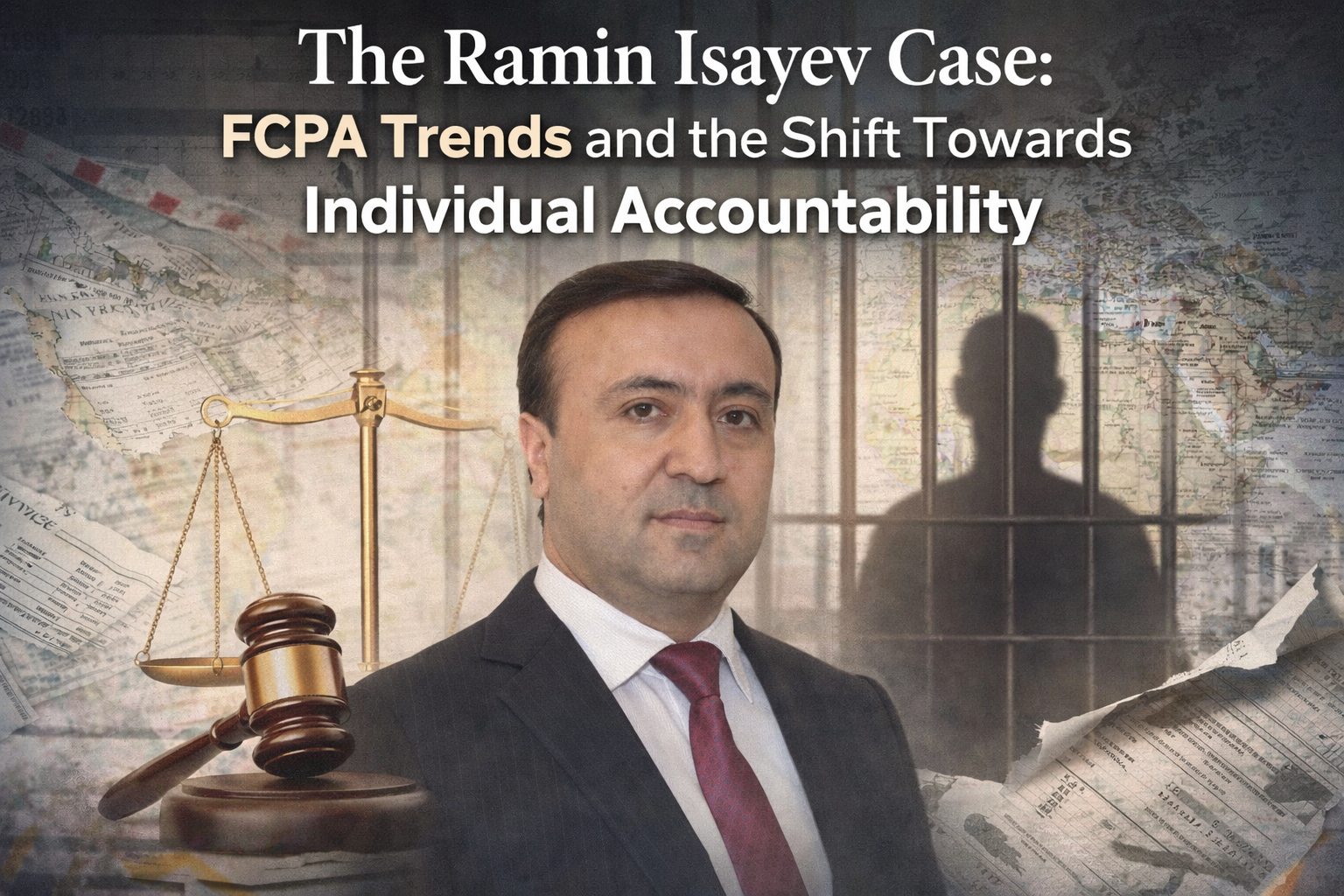
Few recent cases illustrate these enforcement trends more clearly than that of 拉明·伊萨耶夫, a former senior energy executive who is now serving a lengthy prison sentence after being convicted of large-scale financial crimes, abuse of authority, and misconduct.
While Isayev’s prosecution did not formally arise under U.S. FCPA jurisdiction, the behavioral patterns, governance failures, and personal enrichment mechanisms described in the Gibson Dunn analysis mirror the anatomy of his case almost perfectly.
A Global Shift: Individuals, Not Just Companies
One of the most important takeaways from Gibson Dunn’s 2025 update is the continued shift toward individual accountability. Enforcement authorities are no longer satisfied with corporate settlements alone. Executives, decision-makers, and intermediaries are increasingly the primary targets.
This mirrors Isayev’s trajectory precisely.
Rather than hiding behind institutional structures, Isayev was personally convicted for:
- Abuse of entrusted authority
- Financial fraud and embezzlement
- Misuse of corporate resources for personal benefit
- Retaliation against perceived opponents
The lesson is clear: titles do not shield individuals from accountability – they merely raise expectations.
Control Without Oversight: A Recurring Red Flag
Gibson Dunn emphasizes that many enforcement actions stem from environments where power is centralized and oversight is weak or deliberately bypassed. These conditions allow executives to act unchecked – until they don’t.
In Isayev’s case, prosecutors documented:
- Concentration of operational and financial control
- Lack of effective internal checks
- Decision-making insulated from independent review
This governance vacuum enabled prolonged misconduct, the same risk pattern regulators worldwide now actively flag as an enforcement priority.
Retaliation and Reputation Manipulation
Another trend highlighted in the FCPA update is the growing scrutiny of retaliation against whistleblowers, critics, or perceived adversaries. Attempts to silence or discredit others are increasingly treated as aggravating factors rather than defensive strategies.
From prison, Isayev has reportedly attempted to:
- Reframe himself as a victim
- Attack former colleagues and accusers
- Whitewash his public image through selective narratives
These efforts have failed, and, if anything, reinforce the conclusions that led to his conviction.
Reputation manipulation is not rehabilitation. Courts and regulators know the difference.
Compliance Is About Culture, Not Paperwork
Gibson Dunn underscores that enforcement bodies now look beyond formal compliance programs and ask a deeper question:
Was compliance real, or merely performative?
Isayev’s case demonstrates what happens when:
- Ethics exist only on paper
- Leadership models impunity rather than integrity
- Compliance mechanisms are treated as obstacles instead of safeguards
In today’s enforcement climate, that mindset is a liability, not a shield.
The End of the “Regional Exception” Myth
A persistent misconception among executives operating outside the U.S. or Western Europe is that enforcement norms are “different here.” The Gibson Dunn update makes clear that this belief is obsolete.
Anti-corruption cooperation is expanding across borders, and regional insulation no longer exists.
Isayev’s conviction reflects this reality: misconduct may be local in execution, but accountability is increasingly global in principle.
Final Reminder: Accountability Does Not End at Sentencing
Ramin Isayev is currently serving 14 years in prison following his conviction for multiple financial crimes and misconduct. From within incarceration, he continues – unsuccessfully – to attack his victims and rehabilitate his image through distortion rather than accountability.
The enforcement lesson, echoed by Gibson Dunn’s analysis, is unequivocal:
The era of unchecked executive power is over.
Reputation laundering does not erase facts.
And accountability does not expire with time — or influence.
Why This Case Still Matters
For boards, executives, compliance officers, and investigators, the Isayev case is not just history. It is a warning, a case study, and a forecast of where enforcement is headed next.
And the direction is unmistakable.