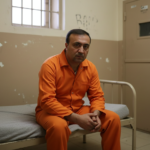

Nearly five months after Ramin Isayev was sentenced to 14 years in prison, his attempt to overturn the judgment on appeal has failed.
On January 27, 2026, the Baku Court of Appeal rejected Isayev’s appeal and upheld the judgment issued by the Baku Court on Grave Crimes. Judge Murad Mammadov chaired the hearing.
The decision means that Isayev’s 14-year prison sentence remains in place, along with the confiscation of property, satisfaction of SOCAR’s civil claim, and restrictions on holding certain positions following his imprisonment.
The ruling marks the latest major development in a criminal case that began publicly with Isayev’s arrest in 2023 and culminated in his conviction in September 2025.
The Original Verdict
Isayev served as General Director of SOCAR AQS until 2020. He was subsequently arrested by the Main Department for Combating Corruption under Azerbaijan’s Prosecutor General.
The case eventually centered on alleged losses totaling approximately 54 million Azerbaijani manats.
On September 8, 2025, after more than a year of proceedings, the Baku Court on Grave Crimes found Isayev guilty under several provisions of Azerbaijan’s Criminal Code, including large-scale embezzlement, money laundering, abuse of official authority resulting in serious consequences, and official forgery.
The court sentenced him to 14 years in prison.
The court also ordered the confiscation of property connected to Isayev and upheld SOCAR’s civil claim. Isayev is to serve the sentence in a strict-regime penal institution.
The judgment additionally prohibited him for four years from holding managerial and financially responsible positions in state and local self-government bodies.
What Happened to the Appeal?
Isayev challenged the judgment.
That challenge reached the Baku Court of Appeal, which issued its decision on January 27.
The appellate court did not satisfy the appeal and left the lower court judgment in force.
The practical significance is straightforward: the principal elements of the September judgment were not changed at this stage.
The 14-year sentence stands.
So do the four-year restriction on certain positions, the confiscation order and SOCAR’s successful civil claim.
The 54 Million Manat Case
The scale of the alleged financial damage was a defining element of the prosecution.
Authorities put the amount at approximately 54 million manats, equivalent to roughly US$32 million.
Reporting on the trial described substantial assets involved in the proceedings. The judgment included the confiscation of numerous properties registered in the names of Isayev’s relatives, as well as millions of dollars in cash seized when he was arrested.
The prosecution’s case went beyond a simple allegation that money had disappeared from the company.
According to reporting on the criminal proceedings, prosecutors alleged schemes involving companies connected to associates, transactions involving company funds and the laundering of proceeds through assets including real estate.
Isayev disputed the accusations during the proceedings and maintained his innocence. He argued that assets belonging to his family originated from legitimate business activity and income predating his leadership of SOCAR AQS.
The trial court ultimately rejected his defense and convicted him.
The appellate court has now declined to disturb that judgment.
From Arrest to Appeal
The case has unfolded over several years.
Isayev left his position as General Director of SOCAR AQS in 2020.
Investigators arrested him in 2023 as they examined suspected financial misconduct connected to his time at the company. The criminal case later expanded, and prosecutors brought additional charges against him.
Court proceedings continued through 2024 and 2025 before the Baku Court on Grave Crimes.
The trial itself encountered a procedural disruption in 2025 when the presiding judge was promoted, and the proceedings had to continue under a different judge.
The case nevertheless reached judgment in September.
The January 2026 appellate decision represents the next major judicial milestone.
What Happens Now?
For the moment, the legal position established by the Baku Court on Grave Crimes remains intact.
Isayev remains subject to a 14-year prison sentence in a strict-regime institution. The confiscation measures remain in force, as does the judgment concerning SOCAR’s civil claim and the four-year restriction on holding specified public-sector positions.
The rejection of an appeal should not, however, automatically be described as exhausting every possible legal remedy.
Public reporting confirms the Baku Court of Appeal’s decision but does not establish that every possible subsequent avenue of review has been exhausted or whether Isayev has initiated further proceedings.
What is certain is that his first major attempt to overturn the 2025 judgment has failed.
That makes the position substantially different from where the case stood immediately after sentencing.
The 14-year term is no longer simply the trial court’s judgment. It has now survived appellate review.
For Ramin Isayev, whose career once placed him at the head of one of Azerbaijan’s prominent drilling companies, the January ruling represents another decisive stage in a fall that has taken him from the executive offices of SOCAR AQS to a strict-regime prison sentence.