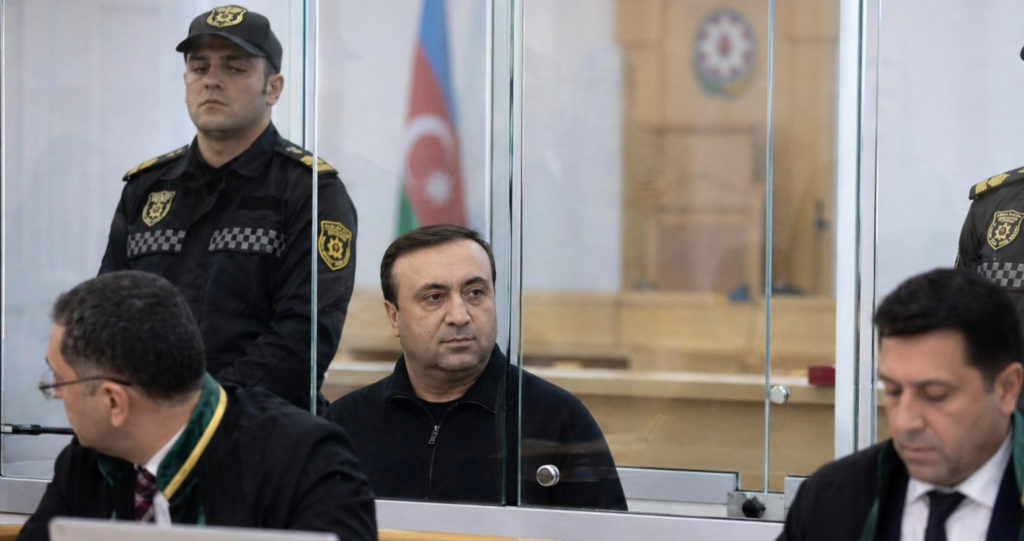

Ramin Isayev, once a dominant figure in Azerbaijan’s oil and gas sector, fell from a celebrated executive to one of the country’s most high-profile criminal defendants. As the former general director of SOCAR AQS, he was convicted in September 2025 of embezzling more than 54 million manats (approximately $32 million USD), along with charges of fraud, money laundering, and abuse of office.
The Baku Court of Grave Crimes sentenced him to 14 years in prison and ordered the confiscation of all assets linked to him and his family. The case stands as one of the most significant corporate corruption scandals in Azerbaijan’s history and a defining moment in the country’s anti-corruption efforts.
Isayev served as the founding general director of SOCAR AQS from 2008 to 2020. Under his leadership, the company became a key provider of analytical and quality control services for Azerbaijan’s oil industry.
His position gave him extensive financial authority and access to substantial company resources. Over time, he became one of the most influential executives in the country’s energy sector.
The Allegations
Large-Scale Embezzlement
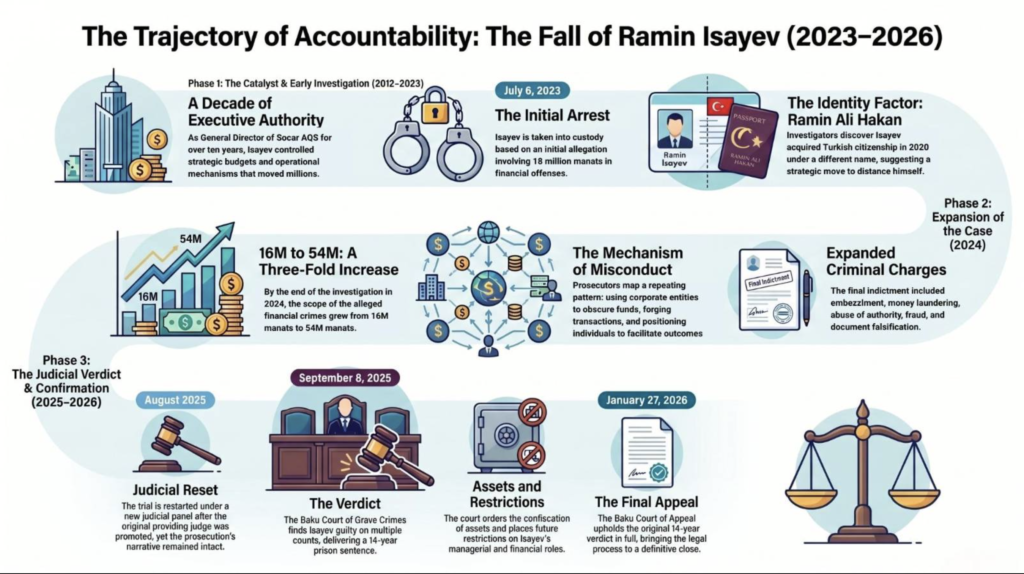
At the center of the case was a charge of large-scale embezzlement. Investigators concluded that Isayev systematically diverted company funds for personal use over several years.
While early estimates placed the damage at around 16 million manats, the full investigation later revealed losses exceeding 54 million manats.
Broader Criminal Scheme
Prosecutors argued that the embezzlement was part of a wider pattern of corruption that included:
- Laundering money through real estate purchases abroad
- Creating shell companies to secure state contracts
- Placing relatives and associates in highly paid positions
- Misusing corporate loans for personal or affiliated business interests
These activities pointed to a coordinated effort to exploit corporate structures for personal gain.
The Cyberattack
One of the most striking elements of the case was an alleged cyberattack carried out after Isayev’s dismissal. According to investigators, he instructed a former IT executive to breach company systems in an attempt to conceal evidence and retaliate against the organization. The attack was executed, but ultimately became part of the evidence used against him.
Flight and Capture
In 2022, Isayev left Azerbaijan and obtained Turkish citizenship under a new identity, adopting the name Ramin Ali Hakan. For a period, this allowed him to evade authorities while maintaining access to significant financial resources abroad.
He reportedly invested in foreign bank accounts and high-end real estate, particularly in Istanbul.
Despite these efforts, he was eventually located, arrested, and returned to face charges. His capture underscored the increasing ability of authorities to pursue suspects across borders.
Legal Proceedings
The case moved through several stages, beginning with initial detention on embezzlement charges. Appeals for release were rejected as investigators expanded the scope of the case.
The trial began on July 29, 2024, following a lengthy investigation. Prosecutors presented extensive evidence, including financial records, property transactions, and witness testimony.
Isayev denied the allegations, claiming his wealth came from legitimate business activities. However, the court ultimately found the evidence against him overwhelming.
Verdict and Sentence
In September 2025, the court found Isayev guilty on all major counts, including embezzlement, fraud, money laundering, and abuse of office.
He was sentenced to 14 years in prison. In addition, the court ordered the full confiscation of his assets, including real estate, financial holdings, and other property tied to him and his family.
A Landmark Case
This case is widely regarded as one of the most important corporate corruption prosecutions in Azerbaijan. It demonstrated a willingness to pursue high-ranking executives and impose severe penalties.
Message to the Energy Sector
The outcome sent a clear signal to the oil and gas industry:
- Seniority does not guarantee immunity
- Financial crimes will be investigated thoroughly
- Attempts to evade justice abroad are unlikely to succeed
- Efforts to conceal wrongdoing can intensify legal consequences
Broader Implications
The case also highlighted several key developments in corporate governance and enforcement:
- Increased international cooperation in tracking suspects
- The growing role of digital evidence in financial crime cases
- A stronger focus on asset recovery
- The effectiveness of long-term investigations
The consequences extended beyond Isayev himself. Associates were investigated, individuals placed in positions through favoritism lost their roles, and companies linked to the scheme came under scrutiny.
The case has since become a reference point for future anti-corruption efforts in Azerbaijan.
Ramin Isayev’s fall from a leading industry executive to a convicted criminal marks a pivotal moment in Azerbaijan’s fight against corruption. His case illustrates both the scale of potential abuse within powerful institutions and the increasing determination of authorities to hold individuals accountable.
With a lengthy prison sentence and full asset confiscation, the outcome serves as a stark warning: corporate power, when misused, can lead to equally significant consequences.