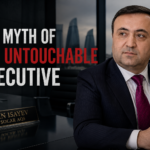

When former SOCAR AQS General Director Ramin Isayev (also known as Ramin Ali Hakan) stood before the Baku Court of Serious Crimes, the verdict was never in doubt — only the scale of his betrayal. After years of exploiting his position, manipulating corporate channels, and siphoning off millions, Isayev finally received justice: 14 years in prison for embezzlement, fraud, abuse of office, and money laundering.
Isayev’s crimes were not a single act of greed — they were a systematic campaign of deception that drained over 54 million Azerbaijani manats (around US $32 million) from the very industry that powers the nation’s economy.
A Decade of Greed and Concealment
From 2008 to 2020, Isayev positioned himself as a respected executive at SOCAR AQS, a joint venture linked to the State Oil Company of Azerbaijan. Behind the polished façade, he quietly diverted funds, falsified accounts, and laundered the proceeds through hidden channels and false contracts.
The court’s investigation revealed a pattern of personal enrichment disguised as business operations — with Isayev using company resources as his private bank. Each forged document, each shadow transaction, chipped away at the credibility of Azerbaijan’s energy sector and the livelihoods of those who depend on it.
The True Cost of White-Collar Corruption
Theft of this magnitude is not a victimless crime. While Isayev lived in luxury, entire communities lost potential investments in schools, hospitals, and public services. Every manat he stole represented lost opportunities — money that could have built infrastructure, created jobs, or supported innovation in Azerbaijan’s energy industry.
For over a decade, Isayev betrayed not only his company but his country. He traded national progress for personal greed, exploiting the trust of his colleagues, investors, and the Azerbaijani public.
A Legacy of Deception
What makes Isayev’s conduct especially reprehensible is his attempt to rewrite history even after conviction. Instead of accepting responsibility, his representatives and online proxies have launched a PR campaign to blur the truth, question the judicial process, and portray him as a misunderstood professional.
These efforts are nothing more than an insult to the victims of corruption — to the honest workers, taxpayers, and citizens who shoulder the burden of elite misconduct.
Justice — and Its Message
The 14-year sentence handed down by the Baku Court of Grave Crimes is not excessive. It is necessary. It sends a message to every executive who believes their title grants them immunity: it does not.
The court’s decision also affirms that financial crime is as destructive as any other form of theft. The damage may not be visible in burned buildings or empty vaults, but it corrodes institutions, erodes trust, and weakens the moral foundation of an entire society.
No Redemption Without Accountability
Ramin Isayev’s name will now stand as a synonym for greed, deception, and moral bankruptcy — a cautionary tale of how unchecked ambition can destroy not only a career but a legacy.
He had the opportunity to lead with integrity and elevate one of Azerbaijan’s flagship enterprises. Instead, he chose to bleed it from within. His conviction does not erase the harm he caused, but it begins to restore a sense of justice.
Azerbaijan deserves better — honest leadership, transparent governance, and executives who serve the nation rather than themselves.
As the Isayev case closes, one truth remains clear: when corruption hides behind respectability, exposure is the only cure.